- admin
- March 26, 2026
As the global sports industry continues to expand, with cross-border competitions and commercial partnerships becoming increasingly prevalent, the incidence of sports-related disputes has risen in parallel. Such disputes encompass a wide spectrum of issues, including contractual disagreements, sponsorship and broadcasting rights, selection and eligibility matters, as well as anti-doping violations.
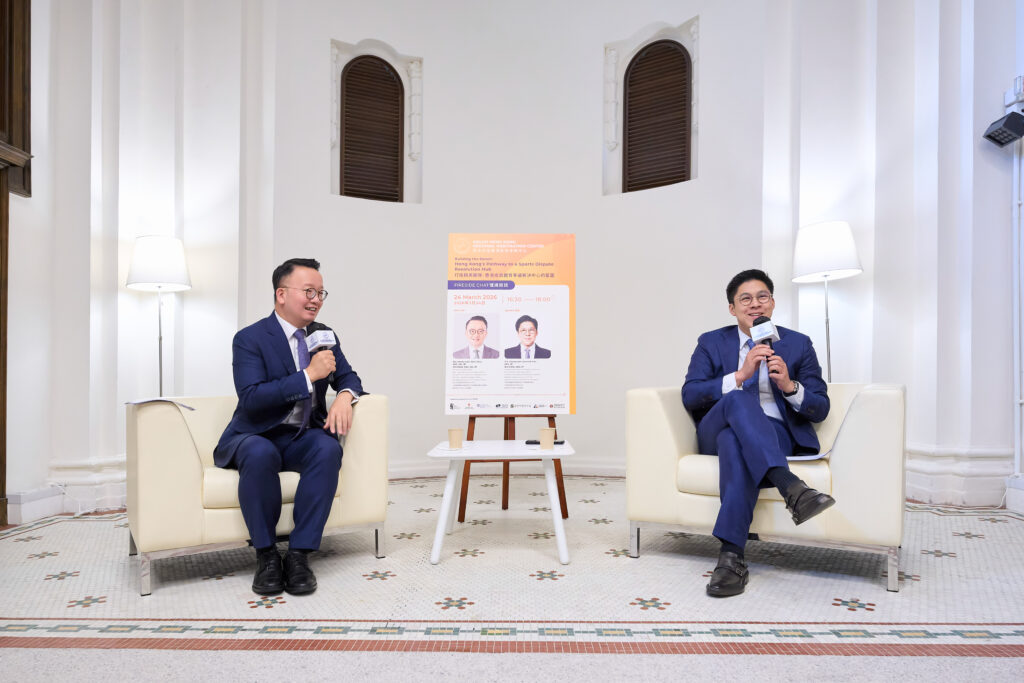
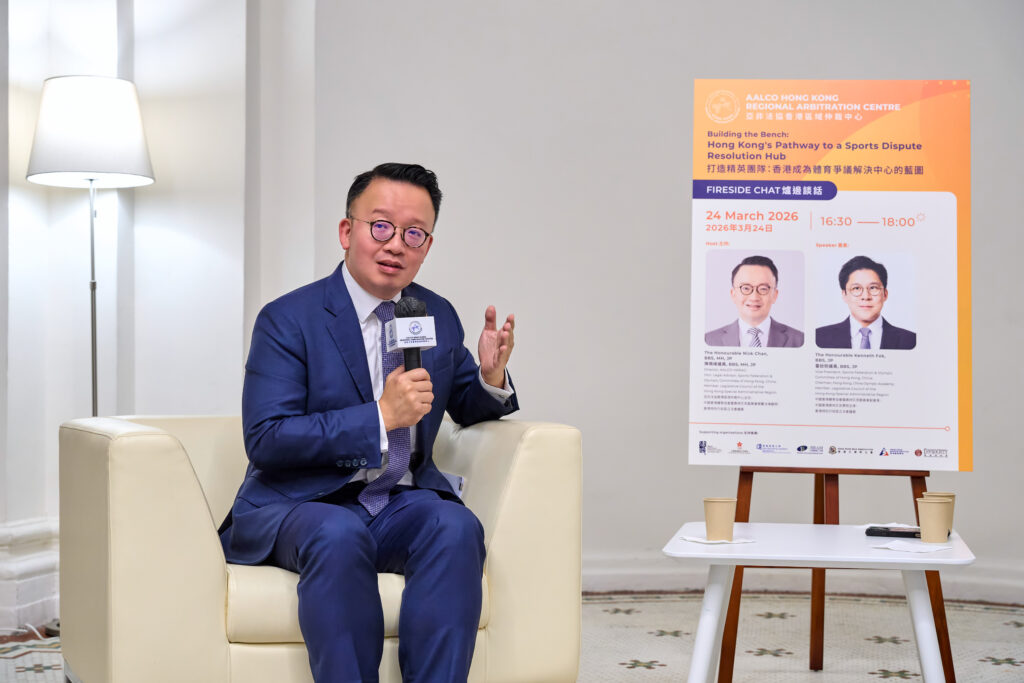
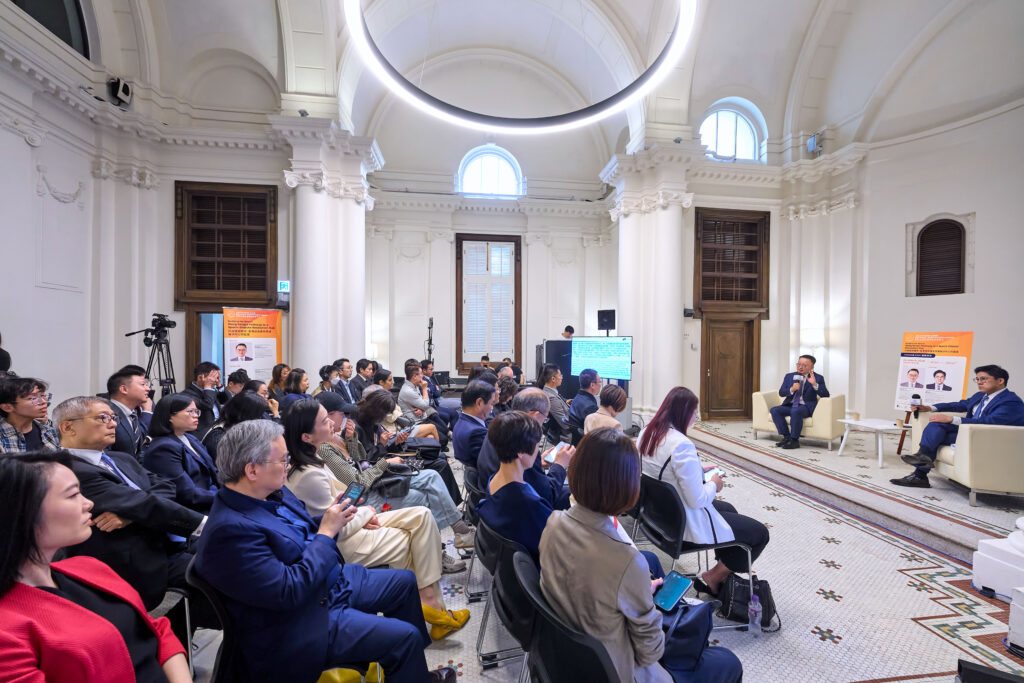
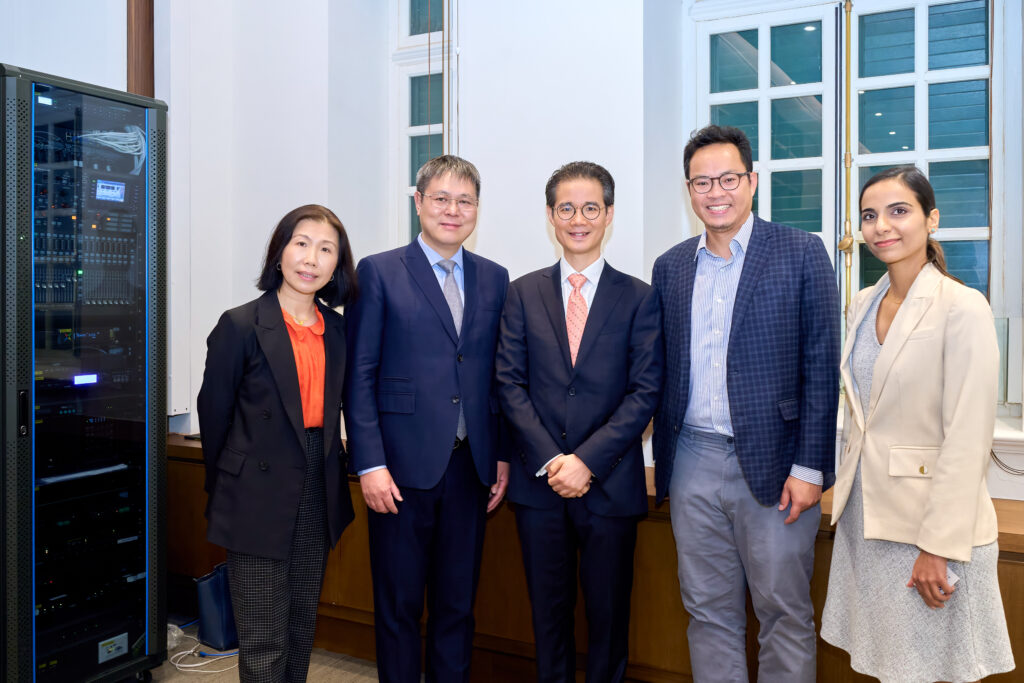
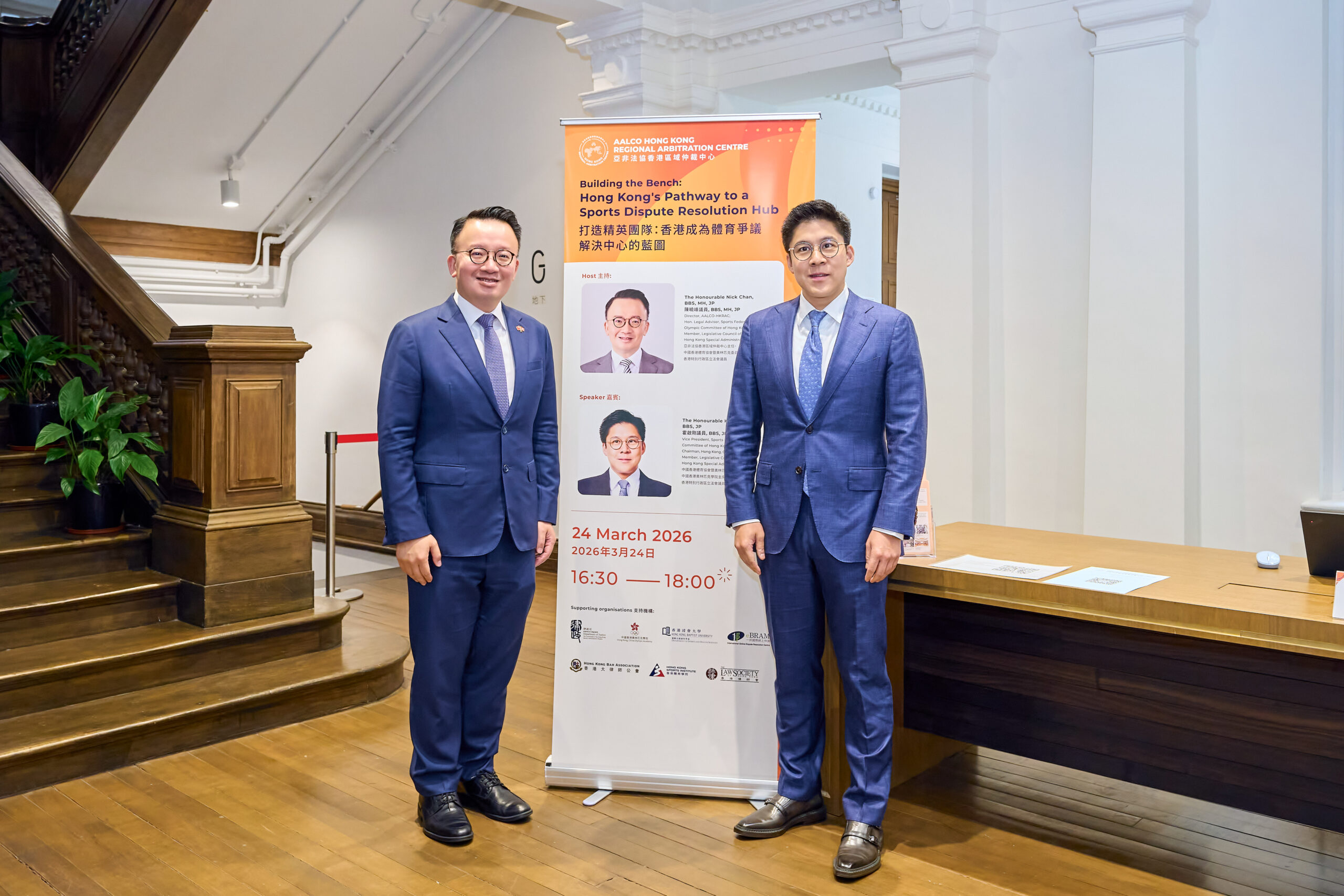
The AALCO Hong Kong Regional Arbitration Centre (AALCO-HKRAC) hosted a Fireside Chat on 24 March 2026 entitled “Building the Bench: Hong Kong’s Pathway to a Sports Dispute Resolution Hub.” The event was chaired by the Honourable Nick Chan, BBS, MH, JP, Director of the AALCO-HKRAC, Honourable Legal Advisor to the Sports Federation & Olympic Committee of Hong Kong, China, and Member of the Legislative Council. The guest speaker, the Honourable Kenneth Fok, BBS, JP, Vice President of the Sports Federation & Olympic Committee of Hong Kong, China; Chairman of the Hong Kong, China Olympic Academy; and Member of the Legislative Council, shared his insights drawn from observations during the “Two Sessions” and his extensive experience in sports governance.
The discussion examined how Hong Kong can capitalise on its robust common law system and world-class mediation and arbitration services to position itself as a leading regional hub for sports dispute resolution, addressing the growing demand for specialised expertise, institutional infrastructure, and international connectivity.
Through the “15th Five-Year Plan” lens: from competitive sports to industry and mass participation
Mr Fok highlighted a clear signal from the Two Sessions: sport is no longer measured only by medals or “competitive sports” performance. Increasingly, the focus is on building a “sports power” and advancing “Healthy China”, with broader mass participation as a core objective. With China moving further towards a consumption-oriented society, sports consumption and the sports industry are expected to account for a growing share of the economy. He noted that international experience shows the sports industry can represent a meaningful portion of GDP, and that national targets likewise point towards a higher industry share—an important opportunity for Hong Kong and the Greater Bay Area.
Against this backdrop, the sports industry’s scope continues to expand from sports equipment and consumer spending to competitions and the city economy they generate, peripheral products and merchandising, and integrated models such as “sports + tourism”. At the same time, the convergence of sports and technology is becoming more pronounced. Whether through e-sports and digital sports, VR simulation training and online competition formats, or more targeted streaming and subscription models for event viewing, technology is changing how people participate in and consume sport—while also creating more complex questions around rights allocation and consumer protection.
Three essentials in sports disputes: the “set of rules”, timing, and cost
In discussing how sports dispute resolution differs from general commercial dispute resolution, Mr Fok stressed that sport has a distinctive “set of rules” and a multi-layer governance ecosystem involving international federations, continental bodies and national associations. Because these relationships are interconnected and often highly specialised, a dispute resolution mechanism must be recognised and respected by the sports community; otherwise, even a decision may be difficult to implement in practice.
He also pointed to three real-world constraints that define sports disputes:
- Timing: elite sport operates within short competitive windows. If anti-doping, suspension or eligibility matters are not resolved quickly, the outcome can directly affect an athlete’s ability to compete, performance results and even an entire career path.
- Cost: many sports associations rely heavily on public funding, making repeated court litigation impractical. Where parties cannot afford to complete a process, fairness and access to justice may be undermined.
- Feasibility and accessibility: if disputes must always be handled overseas, the process can become slow and expensive, potentially leaving both sides worse off without truly resolving the problem. For many athletes, it may simply be unworkable.
The Pilot Scheme: lowering barriers, building cases, strengthening credibility
Mr. Chan further explained that to aligned with the Government’s Pilot Scheme on Sports Dispute Resolution, AALCO-HKRAC has been selected to operate the scheme. The session outlined how the scheme uses subsidies and a cost-sharing design to lower barriers to mediation and arbitration. In specified scenarios, parties may only need to pay a nominal fee to commence the process, while the Government bears most mediation/arbitration costs (subject to a cap). This structure is intended to meet the core needs of sports disputes: fast, affordable and implementable outcomes.
On building reputation, speakers emphasised that credibility must be accumulated on multiple fronts. Policy support and institutionalisation matter, but so does the development of people and professional communities: mediators and arbitrators with sports experience, supported by cross-sector specialists such as former athletes, coaches, medical and psychology professionals. This ensures that disputes can be handled with both a sound understanding of how sport works and a strong commitment to procedural justice.
Mr Fok also noted that many disputes in sport are not necessarily “big ticket items” but are highly sensitive—such as selection and procedural complaints. A credible, independent mechanism can reduce conflict-of-interest concerns and improve governance. As Hong Kong accumulates more cases and successful outcomes, it becomes easier to attract larger commercial disputes to be resolved in Hong Kong.
Connecting the Greater Bay Area and international cooperation: Hong Kong as the window, the Mainland as the market
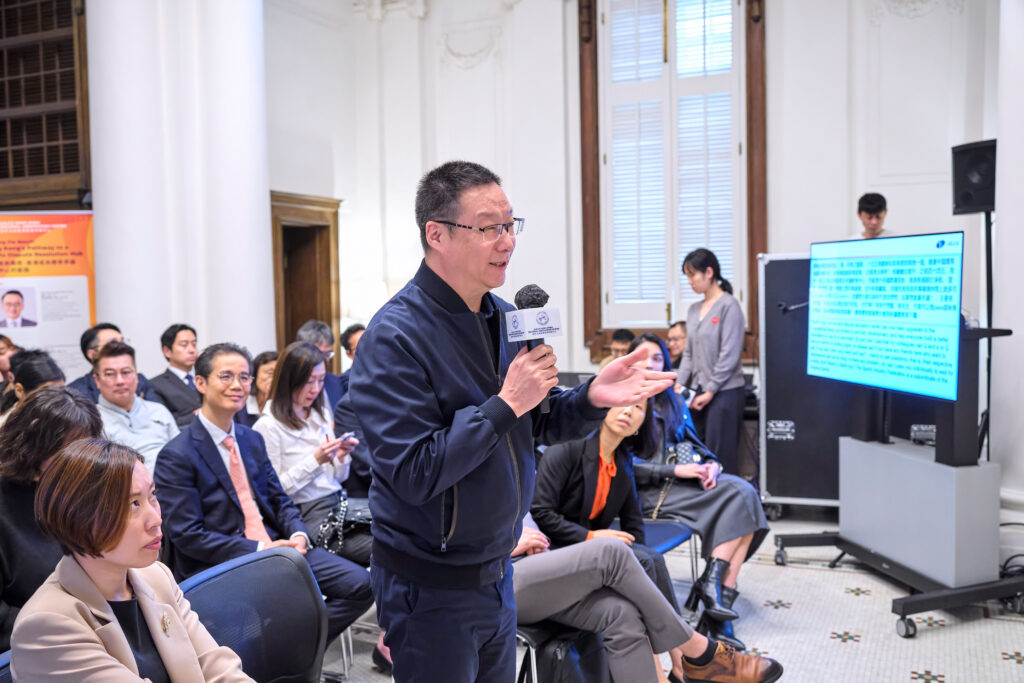
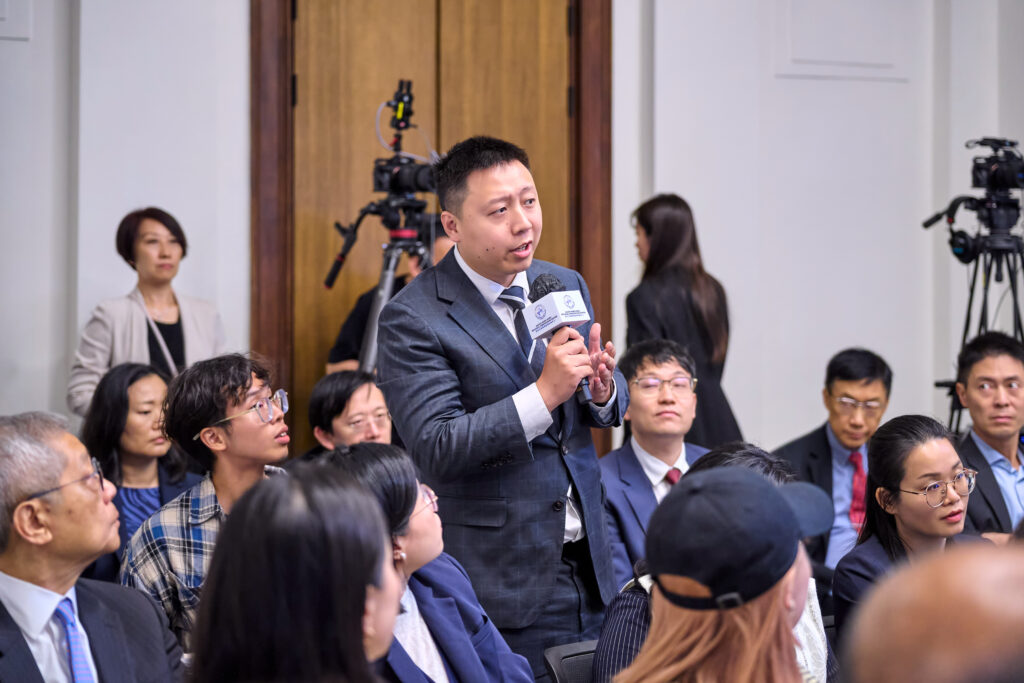
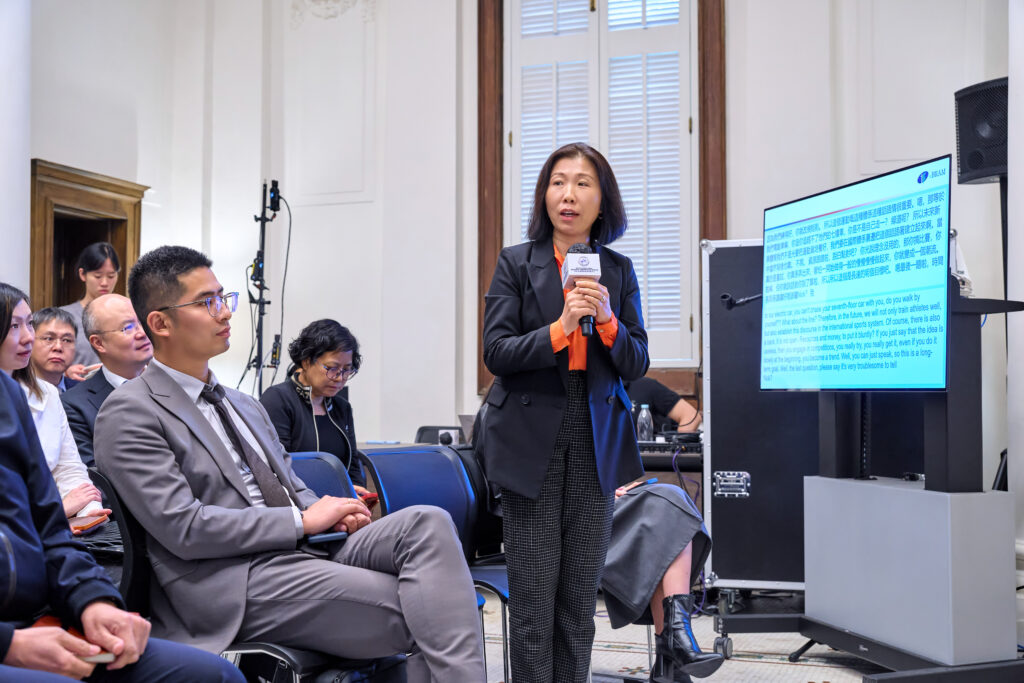
During Q&A, representatives from the Mainland sports industry and legal sector asked how Hong Kong’s development as a sports dispute resolution hub could help the Greater Bay Area and the Mainland’s sports industry. Mr Fok suggested Hong Kong can capitalise on “one country, two systems” and common law advantages to serve as a practical landing point and cooperation platform between international sports IP and the China market. International organisations can sign contracts and build partnerships in Hong Kong, connect with capital and professional services, and work with Greater Bay Area cities such as Shenzhen, Guangzhou and Nansha to co-host major events through a regional alliance that improves scale and cost efficiency.
As cross-border collaboration increases and contracts become more complex, disputes are more difficult to avoid. In this context, Hong Kong can strengthen confidence and participation by offering a dispute resolution process that international stakeholders recognise and trust—supported by a familiar legal environment and professional services.
On comparisons between Hong Kong and Court of Arbitration for Sport in Switzerland as the traditional sports arbitration centre, the discussion also referenced an “eastward shift” in global capital and sponsorship, with more resources coming from Asia, China and the Middle East. Under the industry logic of “follow the money”, dispute resolution clauses and service venues may become more diversified. If Hong Kong seizes the moment and invests in institution-building and talent development, it can become a credible option beyond Switzerland and offer a high-trust second centre for the region and wider markets.
Closing: professionalisation, institutionalisation, and cross-sector talent to build the “bench”
The discussion underscored that Hong Kong’s pathway to becoming a sports dispute resolution hub depends on lowering access barriers through the Pilot Scheme, building credibility through clear rules and procedures, and developing a cross-sector talent pool that forms a true professional bench. With Kai Tak Sports Park and other major facilities coming on stream, and with competitions and commercial partnerships increasing, demand for sports governance and dispute resolution will only grow. With stronger systems and a deeper pool of expertise, Hong Kong can enhance athlete protection, improve fairness in competition, support sports industry upgrading, and expand its international influence in this emerging field.