Enhancing Legal Cooperation Under the Belt and Road Initiative: AALCO-HKRAC Receives Delegation from the Ministry of Justice of Tajikistan – 17 December 2025
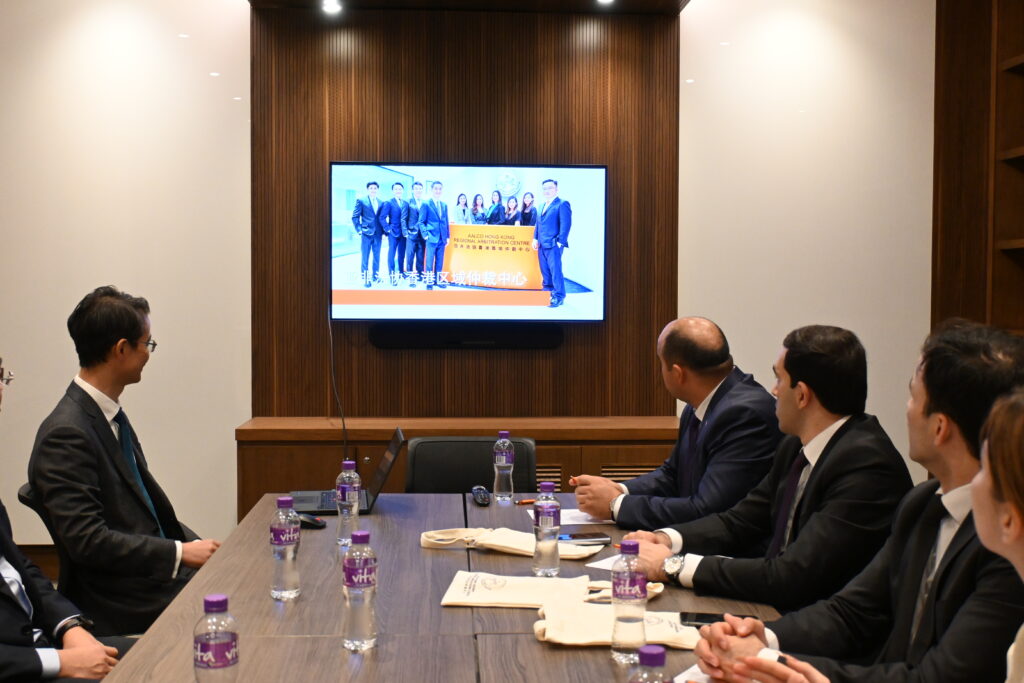
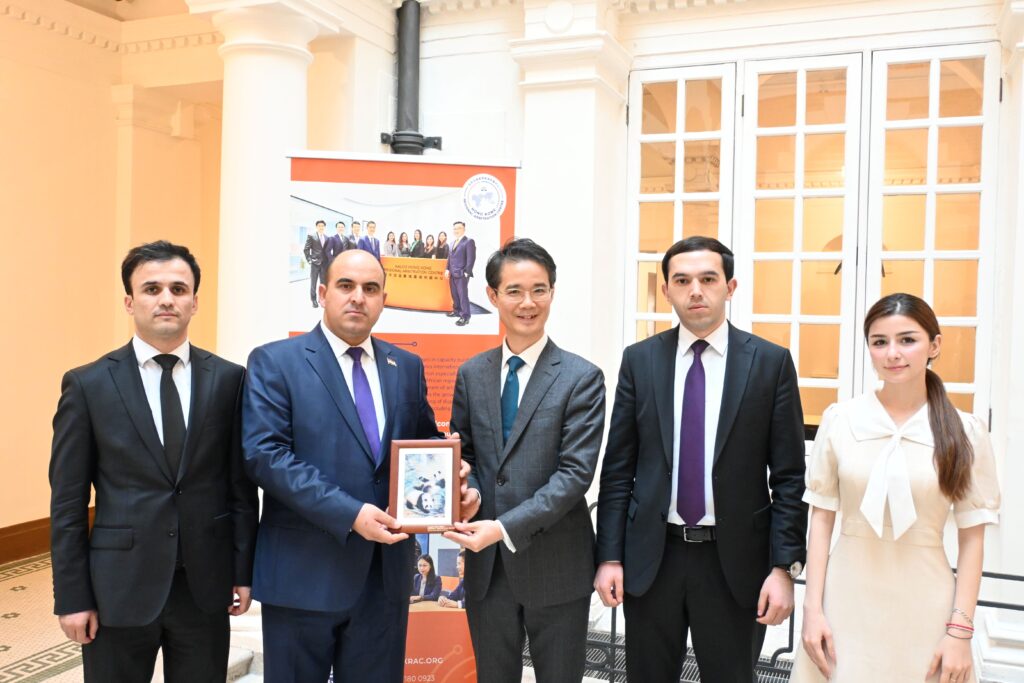
On 17 December 2025, AALCO Hong Kong Regional Arbitration Centre (AALCO-HKRAC) welcomed a delegation from the Ministry of Justice of the Republic of Tajikistan. The delegation was led by Prof. Sobirzoda Isfandiyor Salom, Rector of the Institute for Advanced Studies of the Ministry of Justice of the Republic of Tajikistan, with the aim of exploring new opportunities for deepening legal cooperation under the framework of the Belt and Road Initiative.
Mr. Dennis Cai, Deputy Director of AALCO-HKRAC, extended a warm welcome to the visiting delegation. He shared insights into Hong Kong’s unique strengths as a leading international legal and dispute resolution hub in the Asia-Pacific region. These strengths include its well-established common law system, reciprocal enforcement arrangements with Mainland China and other jurisdictions, and its dynamic legal talent pool. He highlighted that AALCO-HKRAC leverages Hong Kong’s role as a bridge between jurisdictions to provide neutral, efficient, and regionally responsive dispute resolution services for Belt and Road participants.
Mr. Cai also elaborated on the role of Asian-African Legal Consultative Organization (AALCO) in promoting legal cooperation among Asian and African countries. He explained how AALCO-HKRAC’s service framework and procedural rules are designed to address the practical needs of cross-border trade and investment, offering dispute resolution solutions that are transparent, flexible, and cost-effective.
During the exchange session, both sides held in-depth discussions on key topics such as the recognition and enforcement of arbitral awards in Belt and Road jurisdictions and dispute resolution in international infrastructure projects. The Tajik delegation expressed strong interest in Hong Kong’s role as a legal services hub for the Belt and Road Initiative.
This visit helped to enhance mutual understanding between the two sides in the field of rule of law. AALCO-HKRAC looks forward to deepening cooperation with Tajikistan and other Belt and Road partner countries in the future, and to promoting the use of arbitration and mediation to resolve international commercial disputes, in support of regional economic development through legal certainty and cooperation.
Sign In
The password must have a minimum of 8 characters of numbers and letters, contain at least 1 capital letter
I agree with storage and handling of my data by this website.
Privacy Policy