
- aalco_office
- June 8, 2026
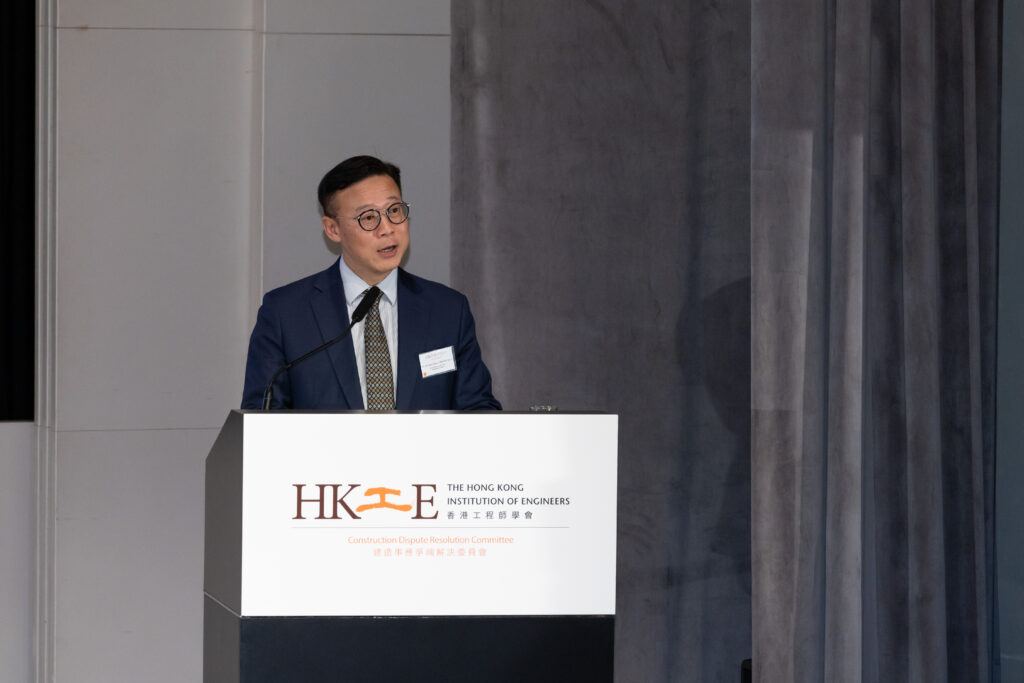
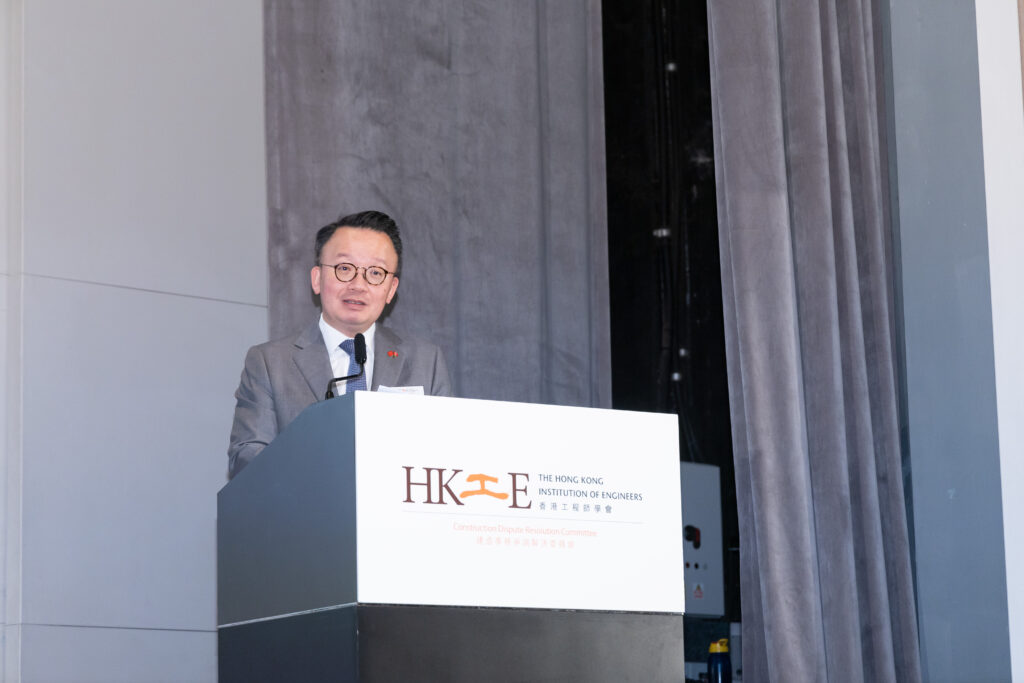
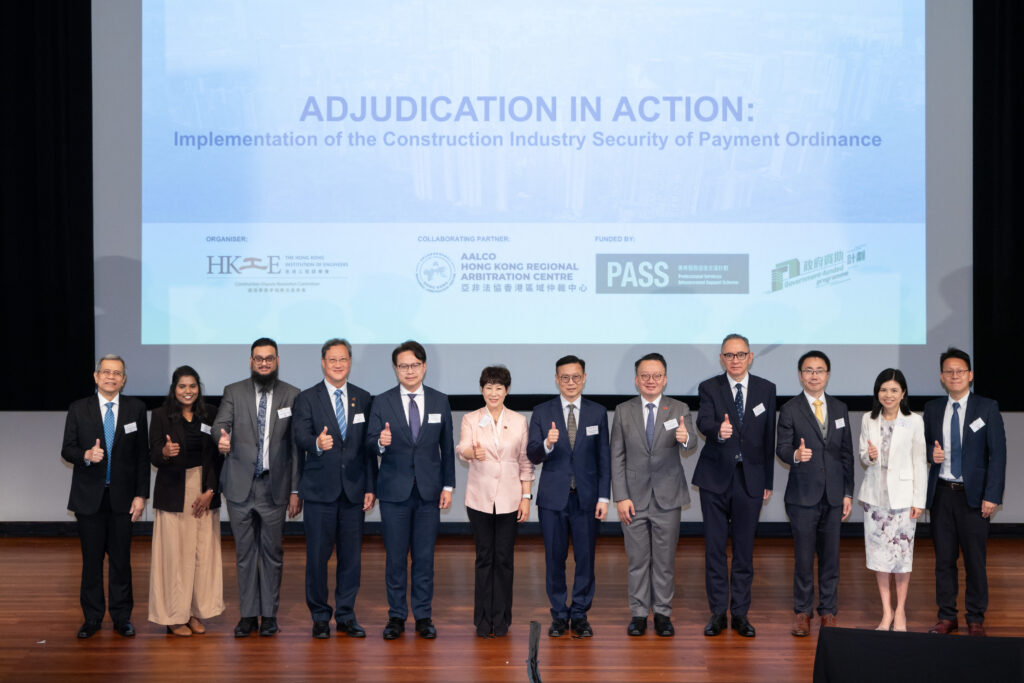
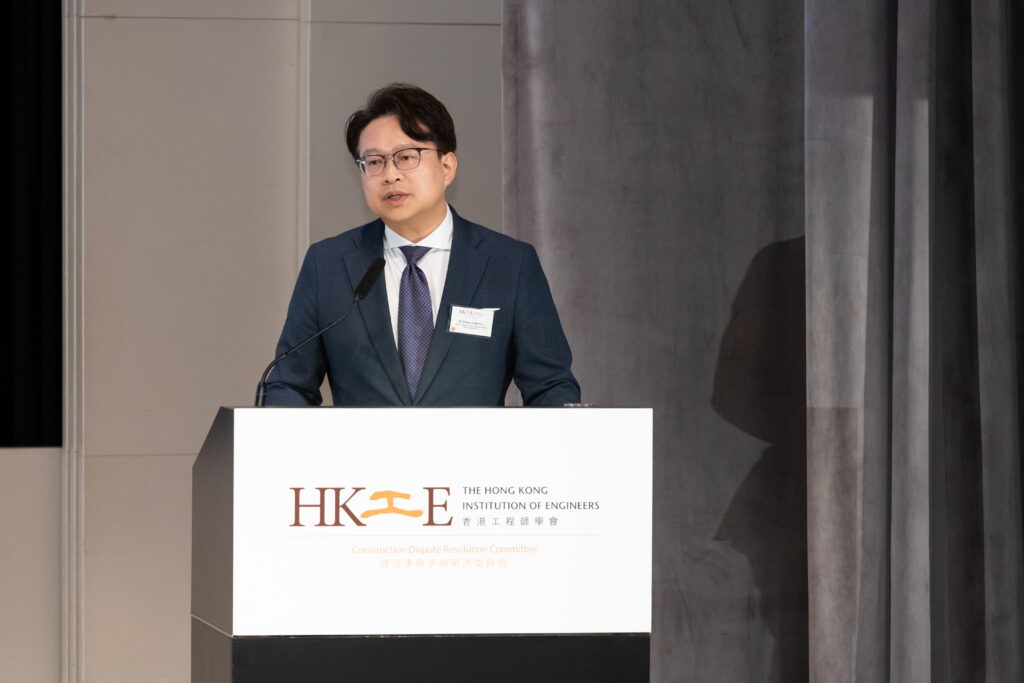
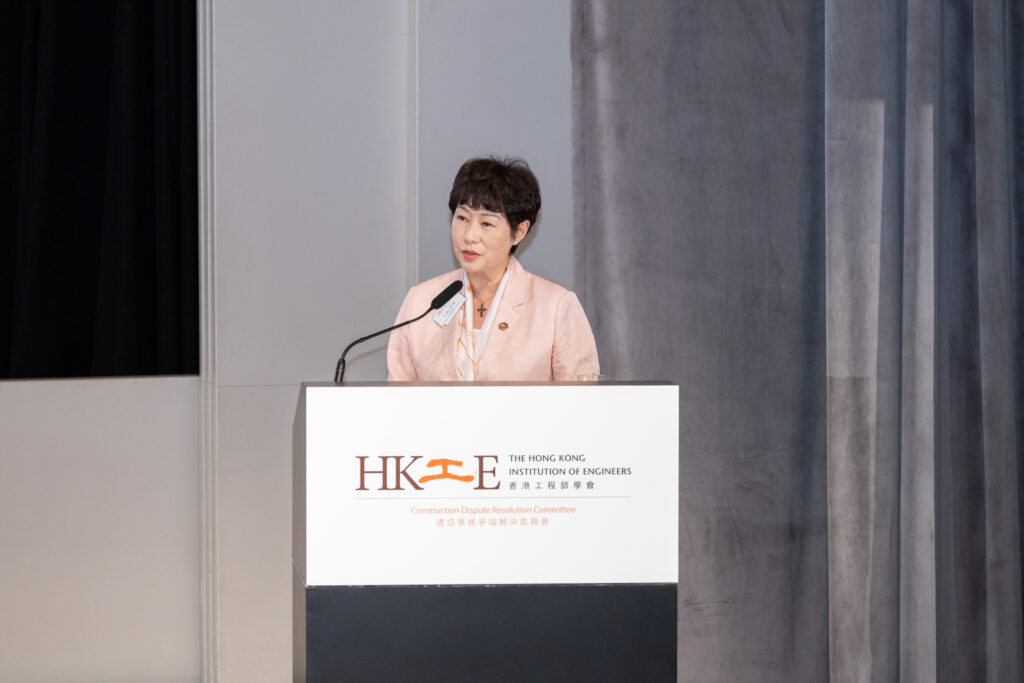
AALCO Hong Kong Regional Arbitration Centre (AALCO-HKRAC) was pleased to serve as the Collaborating Partner of the HKIE–CDRC Conference “Adjudication in Action: Implementation of the Construction Industry Security of Payment Ordinance”, organised by The Hong Kong Institution of Engineers (HKIE) – Construction Dispute Resolution Committee (CDRC). The event was funded by PASS (Professional Services Advancement Support Scheme), HKSAR Government, and was held in hybrid mode (online and physical) at Theatre 2, Hong Kong Convention and Exhibition Centre on 28 May 2026.
The conference brought together engineers, legal practitioners, adjudicators, in-house counsel, project managers, and policymakers for a full-day discussion on how statutory adjudication will operate in practice under the Construction Industry Security of Payment Ordinance, and how the industry can prepare for the procedural and strategic realities of the new regime.
Guest of Honour
Dr the Hon Horace K.K. CHEUNG, SBS, JP, Deputy Secretary for Justice, Department of Justice
Keynote Session (in speaking order)
1) Ir Alice CHOW, President (Session 2025/2026), HKIE
2) Ir Johnny C.H. CHAN, JP, Deputy Secretary for Development (Works), Development Bureau
3) Prof the Hon Nicholas H.F. CHAN, BBS, MH, JP, Legislative Council Member (Legal Functional Constituency) & Director, AALCO-HKRAC
Message and keynote reflections from Prof the Hon Nicholas H.F. Chan, BBS, MH, JP
In his message to the conference, Prof the Hon Nicholas H.F. Chan described the enactment of the Construction Industry Security of Payment Ordinance as a transformative milestone for Hong Kong’s construction industry, addressing long-standing cashflow challenges arising from payment disputes. He noted that statutory adjudication provides a swift, cost-effective, interim-binding mechanism designed to secure progress payments and keep projects moving—supporting the “pay now, argue later” objective that underpins security of payment regimes.
Prof Chan also highlighted that both AALCO-HKRAC and HKIE have been appointed as Adjudicator Nominating Bodies under the Security of Payment Ordinance, reflecting the confidence placed in both institutions to uphold high standards of adjudication practice. Emphasising that capacity building is essential to successful implementation, he reaffirmed AALCO-HKRAC’s commitment to supporting training, accreditation, and professional development for adjudicators, and to working closely with HKIE and other stakeholders to promote the effective roll-out of the new statutory regime.
He further referenced Hong Kong’s first cross-professional joint adjudicators training programme (co-organized by the Hong Kong Institute of Architects (HKIA), HKIE, and the Hong Kong Institute of Surveyors (HKIS), with AALCO-HKRAC supporting and contributing), and noted the importance of continuing cross-professional collaboration as the industry transitions into a new adjudication era.
Conference highlights
The programme focused on practical implementation issues that will matter immediately to both users and adjudicators, including:
1) Conflicts of interest and disclosure in practice
Mr Mohammed TALIB, Partner, Pinsent Masons, explored “grey areas” that frequently arise in real projects, including what adjudicators should disclose, how parties may evaluate risk, and how guidance can be applied to support both independence and procedural fairness.
2) Claim-handling procedure, drafting technique, and strategic implications
Ir Ben T.C. CHAN, Chairman, HKIE–CDRC, discussed procedural steps and practical drafting techniques for payment claims and responses, highlighting common traps that can trigger avoidable disputes or procedural disadvantage.
3) International perspectives and comparative experience
Ms Raagini Sama SUNDARAM, Senior Case Counsel, Asian International Arbitration Centre, provided a cross-jurisdictional comparison of statutory adjudication time limits and practical experience, offering useful reference points as Hong Kong’s regime moves from legislation to operation.
4) Managing delay-related issues under pressure
Ir Prof Christopher W. TO, Immediate Past Chairman, HKIE–CDRC, shared common pitfalls and practical preparation approaches—particularly important in time-compressed processes where evidential discipline and early structuring of the case can be decisive.
5) Fairness, jurisdiction, and timing constraints
The Hon Justice Dato’ LEE Swee Seng, Judge, The Federal Court of Malaysia, walked participants through core features of security of payment legislation and offered practical guidance on statutory timelines, including which steps may be extendable (and which are often not).
6) Beyond adjudication: complementary processes
Ms May NG, Partner, DLA Piper Hong Kong, discussed how mediation, arbitration, and expert witness services can complement adjudication as part of a broader dispute avoidance and resolution strategy.
7) Decision-making discipline for adjudicators
Ir YEUNG Ming-tai, Deputy Chairman, HKIE–CDRC, addressed issues of procedural fairness under tight deadlines, including concerns around “trial by ambush”, what “rough justice” may mean in this context, and how adjudicators can provide reasons that are clear, credible, and fit for purpose.
AALCO-HKRAC’s adjudication role and services
As an Adjudicator Nominating Body under the Security of Payment Ordinance, AALCO-HKRAC supports the effective implementation of statutory adjudication in Hong Kong through:
- training, accreditation, and continuing professional development initiatives
- maintaining and developing a pool of adjudication professionals under our accreditation framework
- outreach and knowledge-sharing with industry stakeholders on practical implementation and readiness
- promoting best-practice tools and approaches that support dispute prevention and efficient resolution
AALCO-HKRAC thanks HKIE–CDRC for organising this timely conference and looks forward to continuing collaboration with HKIE and the wider professional community to support prompt payment, healthier cashflow across the construction supply chain, and efficient project delivery under the new statutory regime.